
NEWS
Load Ratings and Wheel Design: Meat Trolley Safety for Heavy Batches
Load Ratings and Wheel Design: Meat Trolley Safety for Heavy Batches
For quality control and safety managers, selecting the right Meat Trolley is essential when handling heavy batches in demanding processing environments.
Load ratings, wheel design, and 304 stainless steel construction affect transport stability, hygiene, operator safety, and production efficiency across daily meat processing operations.
A trolley that appears robust can still create serious risks if its declared capacity, wheel configuration, floor conditions, and cleaning requirements are not evaluated together.
For heavy batches, the practical question is not simply how much product a trolley can hold. It is whether it remains controlled throughout loading, transport, braking, unloading, and sanitation.
Quality and safety teams should treat trolley selection as a documented risk-control decision. The equipment influences manual handling exposure, contamination prevention, product loss, and workflow continuity.
This guide explains how to assess Meat Trolley load ratings and mobility features, identify weak specifications, and establish practical acceptance criteria for demanding processing areas.
The strongest purchasing decision is based on real batch weight, route conditions, operator handling practices, and cleaning procedures rather than a supplier capacity figure alone.
Start With the Real Working Load, Not the Headline Capacity
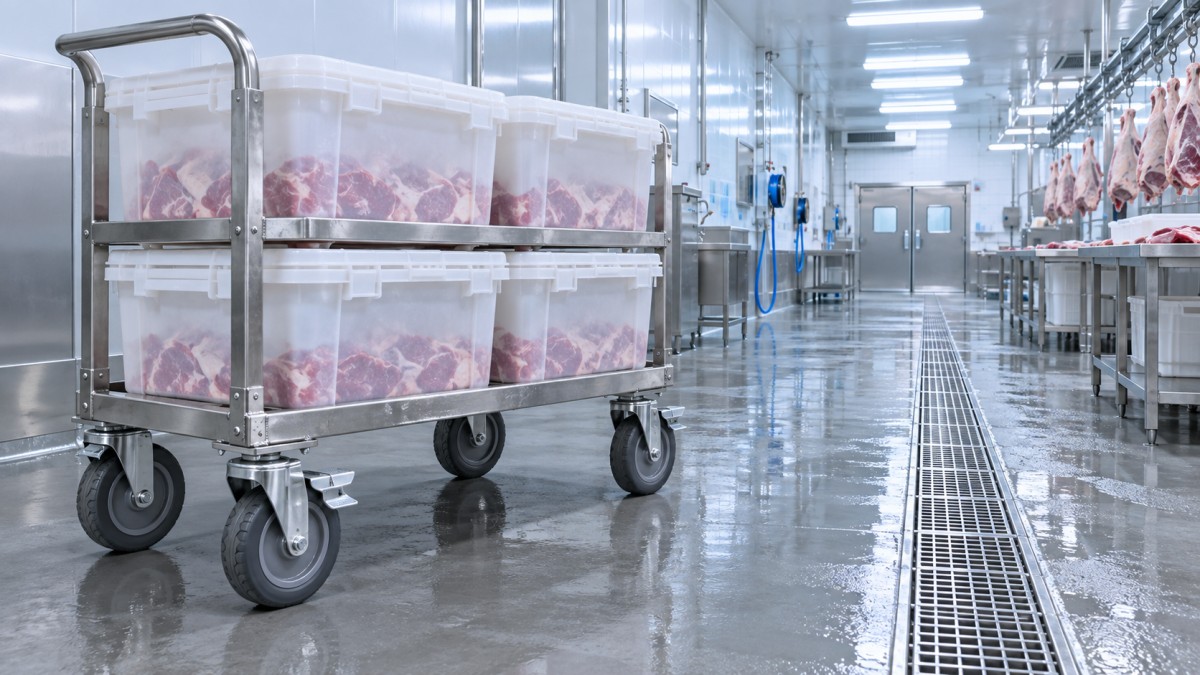
A Meat Trolley load rating should represent its safe working capacity under normal operating conditions. It should not be confused with a theoretical maximum achieved under ideal static conditions.
Begin by calculating the heaviest expected load, including meat, ice, marinades, containers, liners, racks, and any accessories carried during transfer between process stages.
Use the highest routine batch weight rather than the average batch. Safety incidents often occur during peak production, changeovers, rework handling, or temporary production increases.
A sensible internal rule is to maintain operating headroom below the stated load rating. This margin accounts for dynamic forces caused by pushing, stopping, uneven floors, and threshold crossings.
Static loading is only one part of the assessment. When a full trolley moves, product shifts and momentum increases force on castors, frames, welds, handles, and braking components.
Review whether the load is evenly distributed. A trolley loaded heavily at one end can become difficult to steer, place excessive stress on individual wheels, and increase tipping risk.
For open bins, examine fill height as well as total weight. High loads can shift during turning, create splash hazards, and obstruct an operator's view of routes and pedestrians.
Evaluate Wheel Design as a Safety System
Wheel design determines whether a loaded trolley can move predictably. For safety managers, castors deserve the same scrutiny as the stainless frame because failures often begin at floor level.
Wheel diameter affects how easily a trolley crosses drains, joints, doorway thresholds, and damaged floor areas. Larger wheels generally handle surface irregularities with less shock and effort.
However, wheel size must be considered alongside overall trolley height. Excessive height can make loading uncomfortable, reduce visibility, and create ergonomic strain during repetitive handling tasks.
Select wheel materials according to the plant environment. Wheels should resist water, fat, cleaning chemicals, temperature changes, and residue buildup without cracking, swelling, or losing traction.
Non-marking polyurethane or food-suitable rubber options may improve grip and reduce noise, while harder wheel materials may roll more efficiently on smooth, dry floors.
Quality teams should inspect how wheel material performs after repeated washdowns. A wheel that rolls well when new may become difficult to clean or degrade after chemical exposure.
Castor mounting must also be robust. Examine brackets, fasteners, swivel assemblies, and weld areas for evidence that they can withstand frequent directional changes under full load.
Brakes, Steering, and Handle Placement Affect Daily Control
A braking system is essential wherever trolleys are parked near processing equipment, ramps, chillers, loading zones, or areas with regular staff movement and wet-floor exposure.
Check whether brakes lock both wheel rotation and swivel movement. Locking only the wheel may not prevent an overloaded trolley from pivoting or drifting when force is applied.
Brake controls should be reachable without placing hands near contaminated surfaces or requiring awkward foot positions. Operators need to engage and release them reliably while wearing safety footwear.
For longer transport routes, a directional lock can improve straight-line travel. This feature helps reduce steering corrections, particularly when heavy product creates resistance during pushing.
Handle design also deserves a practical trial. Handles should provide enough clearance for gloved hands, avoid sharp edges, and allow operators to push without bending excessively.
Consider the route direction before selecting handle arrangements. A trolley used in narrow corridors may need access from multiple sides, while dedicated routes may benefit from directional handling points.
Do not assume operators should pull heavy loads. Plant procedures should normally favor pushing, because pushing provides better visibility, body positioning, and control over sudden trolley movement.
Match Trolley Construction to Hygiene and Process Flow
Load safety cannot be separated from hygienic design. A trolley that is difficult to clean can create microbiological risks, production delays, and inspection findings despite having adequate capacity.
304 stainless steel is widely valued in meat processing because it provides corrosion resistance, durability, and a cleanable surface suitable for wet and demanding operating environments.
Inspect weld quality, corners, drainage points, and hollow sections. Smooth continuous welds and accessible surfaces reduce opportunities for residues, moisture, and cleaning chemicals to remain trapped.
Square-tube stainless construction can provide structural strength, but it should be sealed and finished appropriately. Open tube ends or damaged caps may allow water ingress and bacterial harborages.
Confirm that the trolley design supports your sanitation method. This includes foam cleaning, rinse pressure, chemical compatibility, drying practices, and the ability to inspect critical areas visually.
Route design matters as much as material selection. Separate raw and cooked-product movements, control trolley identification, and prevent equipment from becoming a cross-contamination transfer point.
Where trolleys support loading and discharge around marination equipment, compatibility should be checked with batch size, outlet height, floor layout, and cleaning requirements.
For example, a Meat Tumbler with hydraulic output may require a stable, correctly sized receiving trolley to prevent spills and unsafe manual recovery.
Build Acceptance Checks Into Your Procurement Process
Before approving a new trolley, request written specifications for safe working load, total equipment weight, wheel type, brake configuration, materials, dimensions, and recommended maintenance intervals.
Ask suppliers how the load rating was determined. Useful answers identify test conditions, distributed-load assumptions, wheel limitations, and any restrictions related to ramps, slopes, or dynamic transport.
Conduct an on-site trial with representative product weights and realistic routes. Test starts, stops, turns, door thresholds, drainage channels, parking, washdown, and unloading conditions.
Include operators, maintenance personnel, sanitation staff, quality personnel, and safety representatives in the trial. Each group identifies different practical issues that may not appear in drawings.
Document observations using clear pass-fail criteria. Record steering effort, brake performance, stability, cleanability, noise, product containment, and any points where manual handling becomes uncomfortable.
Review maintenance access before purchase. Wheels, brakes, bearings, and fasteners require inspection, and replacement parts should be available without prolonged production disruption.
A low purchase price can become expensive if castors fail frequently, cleaning takes longer, or staff must use unsafe workarounds to move full batches through the facility.
Use Routine Inspection to Keep Capacity Claims Meaningful
Even a well-specified Meat Trolley becomes unsafe when wear is ignored. Establish pre-use checks and planned inspections proportionate to load frequency, production intensity, and plant conditions.
Operators should look for damaged wheels, flat spots, loose castors, ineffective brakes, cracked welds, bent frames, sharp edges, and visible corrosion before moving heavy batches.
Supervisors should remove defective trolleys from service immediately. Continuing to use compromised equipment can turn a minor maintenance issue into an injury, spill, or product-contamination event.
Track recurring defects by trolley number, location, and shift. Repeated wheel or brake failures may reveal unsuitable specifications, poor floor conditions, excessive loading, or inadequate cleaning practices.
Training should explain the reason behind load limits. Operators are more likely to follow controls when they understand how overloading affects stopping distance, steering, stability, and equipment life.
Update risk assessments whenever batch sizes, packaging formats, processing routes, or cleaning chemicals change. A previously suitable trolley may no longer be suitable after operational changes.
Conclusion: Choose Capacity and Mobility Together
For heavy meat batches, safe trolley selection depends on more than stainless steel construction or a high stated capacity. Load rating, wheel design, brakes, hygiene, and route conditions work together.
Quality control and safety managers should validate equipment using real loads and real workflows. A properly specified trolley protects employees, supports sanitation, reduces product loss, and keeps production moving reliably.
Product Center
Leave a message online